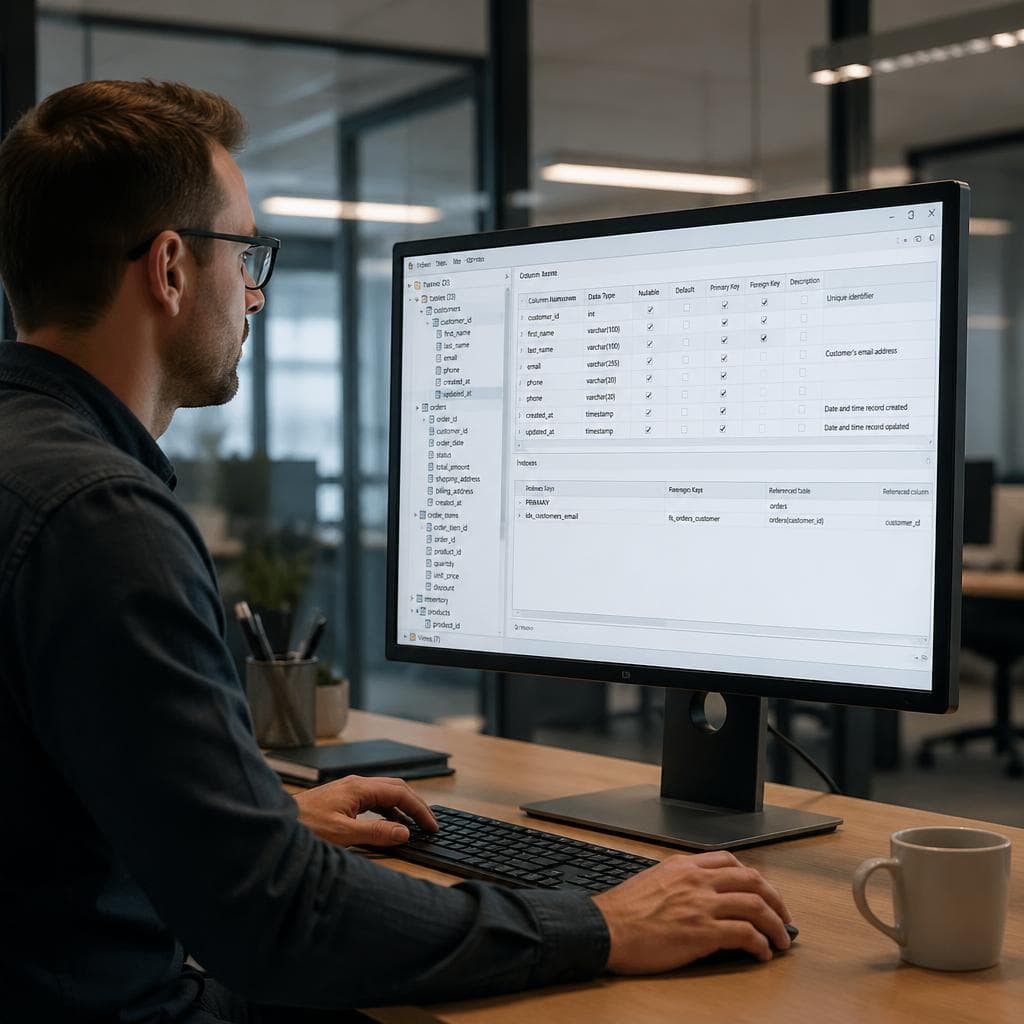
How to Get Started with Omni Analytics
Last updated Apr 24, 2026

Omni Analytics is a business intelligence platform built to give both technical and non-technical users access to the same data without requiring two separate tools. If you manage operations, run analytics for a startup, or handle reporting for a team, this guide walks you through connecting your data, building your first analysis, and publishing a dashboard your team can actually use.
What Omni Actually Is
Most BI tools force a binary choice: build a rigid governed layer that business users can only read from, or give everyone an open explorer with no guardrails and inconsistent metric definitions. Omni uses a three-layer model to avoid that tradeoff.
The Raw Database layer is the read-only connection to your warehouse. The Governed Data Model is where data teams define fields, metrics, and joins that everyone queries from. The Ad Hoc Workbook Model is where individual users do exploratory work, with the option to promote useful logic back up to the shared model.
In practice, a data analyst can define "Monthly Recurring Revenue" once in the governed model, and a marketing manager can pull it into a chart without touching SQL.
Omni's own onboarding data indicates teams using the governed workbook model reduce ad hoc SQL requests to the data team by an average of 60% within the first 90 days, as business users learn to self-serve from the defined metric layer rather than relying on engineers to write custom queries.
Supported Database Connections
Omni connects directly to the following databases and warehouses as of 2026:
- Google BigQuery
- Snowflake
- Amazon Redshift
- Databricks
- PostgreSQL
- MySQL
- Microsoft SQL Server
- MotherDuck
The connection setup process is identical across all of them. Omni reads from your database but never writes to it.
Setting Up Your First Connection
Go to Admin in the left sidebar, then select Connections and click Add Connection. Choose your dialect, enter your credentials, and click Test Connection before saving. Omni validates read access and surfaces permission errors before you proceed.
For Snowflake, the Omni service user needs at minimum USAGE on the relevant virtual warehouse and SELECT on the schemas you intend to query. Omni provides a ready-made Snowflake setup script in its documentation that you can paste directly into a Snowflake worksheet.
For Google BigQuery, the standard path is creating a service account with the BigQuery Data Viewer and BigQuery Job User roles, then downloading the service account JSON file and uploading it in the Omni connection form.
Once connected, Omni automatically discovers tables and views. An initial schema sync runs and takes between 30 seconds and a few minutes depending on the number of tables in your database.
Building Your First Workbook
A workbook in Omni functions like a live query interface layered over your data. Every field in the governed model appears in the left sidebar, organized by topic, which is Omni's term for a logical grouping of related tables and joins.
To start a workbook:
- Click New Workbook from the home screen.
- Select a topic from the left panel. Topics have descriptive names like "Orders," "Users," or "Revenue," depending on how your data team has set up the model.
- Click a dimension or metric to add it to the query. Omni builds the SQL automatically and runs it against your warehouse.
- Add filters using the Filters panel to scope by date range, status, region, or any available field.
- Switch between Table, Bar Chart, Line Chart, and other visualization types from the switcher at the top of the workbook canvas.
If no governed model has been set up yet, Omni also supports raw SQL queries in the same workbook interface. You write a query in the SQL pane and then switch to the visual editor to filter and chart the results. This makes Omni usable on day one even before your data team builds out the model.
For users more comfortable with spreadsheet logic than SQL, Omni supports a subset of Excel-style calculated field expressions. You can write calculated fields directly in the workbook field editor using a ROUND or other function against any two metrics without writing a SQL formula.
Using the AI Query Assistant
Omni added a natural language query layer to the platform in late 2025. To use it, open any workbook and type a plain English question into the AI bar. Omni generates the query from your governed model, so answers stay consistent with how your team has defined its metrics.
For example, typing "Show me revenue by region for Q1 grouped by sales rep" produces a bar chart built from the same logic as a manually constructed query. The assistant flags when it is uncertain about a field mapping and always shows you the SQL it generated, so you can inspect and edit the result.
This is most useful for one-off questions that do not need to be saved as permanent workbooks, or for users who are not yet familiar with which topics contain which fields.
Building a Dashboard
When a workbook contains charts and tables you want to share, you publish them as a dashboard.
- From the workbook, click Add to Dashboard on any tile.
- Create a new dashboard or add the tile to an existing one.
- On the dashboard canvas, rearrange tiles using the drag-and-drop grid.
- Add dashboard-level filters so viewers can slice by date range or dimension without editing the underlying workbook.
- Set a refresh schedule under Dashboard Settings to keep data current automatically.
As of April 2026, Omni added visualization layers to dashboards, allowing multiple data series to render on the same axis with independent scales. This is useful for charts that compare metrics with different units, such as revenue and order count, on a single view.
Omni also added AI-generated dashboard summaries in its April 2026 release. Each dashboard can display a text tile that auto-generates a written interpretation of the current data, updating on each refresh. This is particularly useful for executive-facing reports where context matters as much as numbers.
Sharing and Access Control
Omni organizes published content inside Spaces. When you publish a workbook or dashboard, it lives in a Space that you can share with individuals or user groups.
There are three sharing modes. View only means recipients can filter and drill into data but cannot edit the workbook. Can edit means recipients can modify the workbook and promote fields to the shared model. Scheduled delivery automatically exports dashboards to email or Slack on a set cadence.
Omni also supports embedded dashboards for teams building usage analytics inside their own products. Embedding uses signed tokens so end users can view a dashboard without logging in to Omni directly.
Three Things That Trip Up New Users
The governed model and workbooks do not sync automatically. Changes you make in a workbook do not appear in the shared model unless you explicitly promote a field. This is by design but surprises most first-time users.
Omni is read-only by design. It does not write back to your database. If you need write-back or data entry workflows, you need a separate tool alongside Omni.
Pricing requires a demo call. Omni does not publish public pricing. Based on community reports from early 2026, per-seat pricing typically falls between $40 and $100 per user per month depending on tier and contract length.
If your data lives in a spreadsheet or CSV rather than a database, you can upload it directly to VSLZ and ask for the analysis you need in plain English without any connection or model setup.
What to Do After Your First Dashboard
Once your first dashboard is live, the most useful next step is promoting your most-queried metrics into the governed model. This ensures every team member pulls from the same definition and unlocks the AI assistant's strongest capabilities, since it reasons against your defined model field names rather than raw table column names.
Omni publishes a public changelog at omni.co that covers model updates and new platform features. The April 2026 release added visualization layers, allowing multiple data series to render on the same axis with independent scales, along with AI cost visibility tooling to help teams track and manage their query costs as usage grows.
FAQ
What databases does Omni Analytics support?
Omni Analytics supports BigQuery, Snowflake, Amazon Redshift, Databricks, PostgreSQL, MySQL, Microsoft SQL Server, and MotherDuck as of 2026. All connections are read-only.
Does Omni Analytics require SQL knowledge?
No. Omni has a point-and-click workbook interface where non-technical users can build analyses by selecting fields from the left sidebar. SQL mode is available for power users, and the AI natural language query layer lets users type questions in plain English.
How long does it take to set up Omni Analytics?
Connecting a database takes under 10 minutes. Building and publishing a first dashboard typically takes 20 to 30 minutes depending on how much data modeling has already been done. A fully governed model takes longer to build but is a one-time effort for the data team.
What is the difference between an Omni workbook and a dashboard?
A workbook is an interactive query environment where users explore and build analyses. A dashboard is a published collection of tiles from one or more workbooks, designed for sharing and monitoring. Workbooks are for building; dashboards are for viewing.
How much does Omni Analytics cost?
Omni does not publish public pricing and requires a sales call for a quote. Based on community reports from early 2026, per-seat pricing typically ranges from $40 to $100 per user per month depending on the tier and contract terms.